Foxglove Companion Plants: 12 Pairings for Shade and Sun
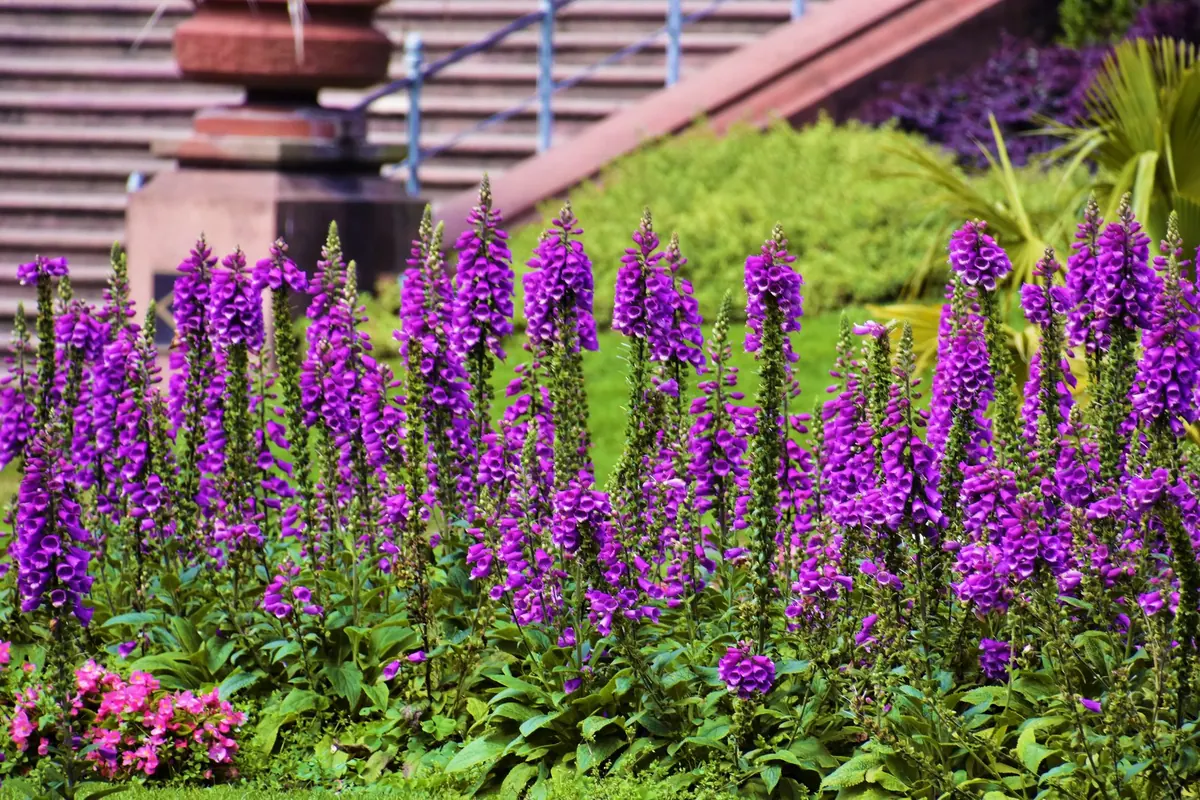
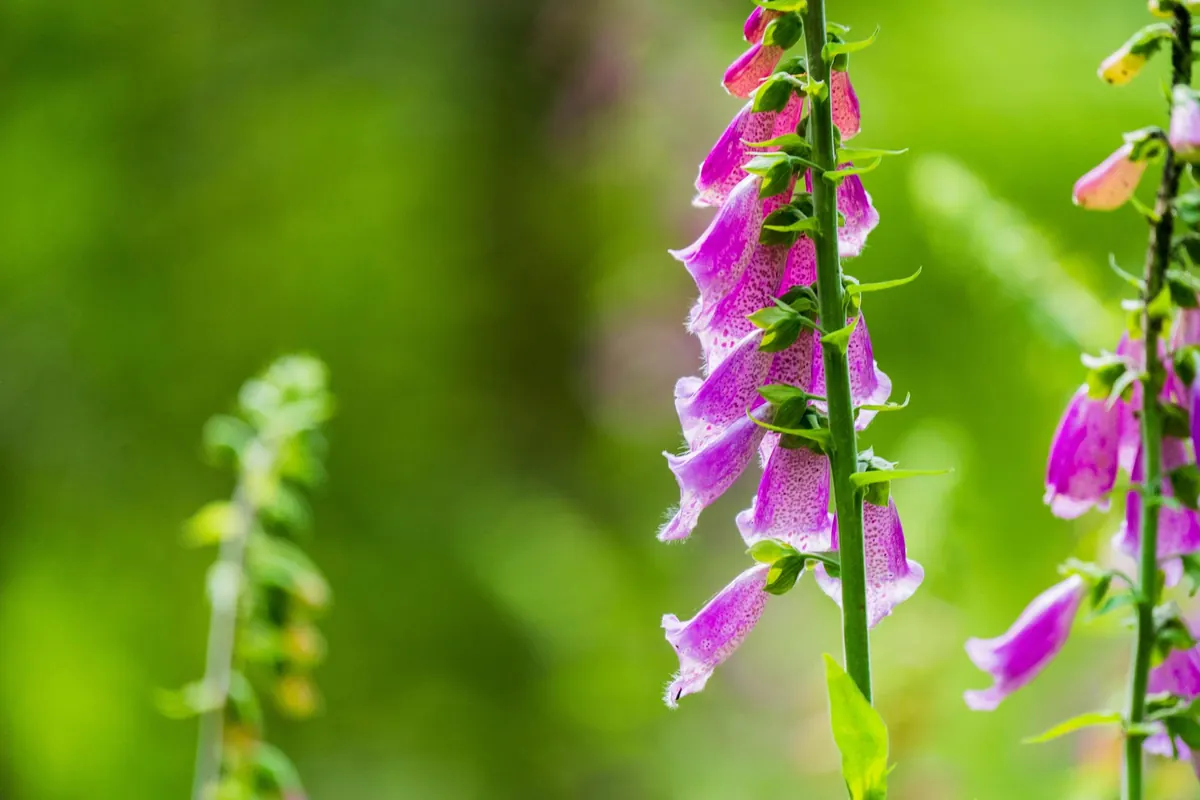
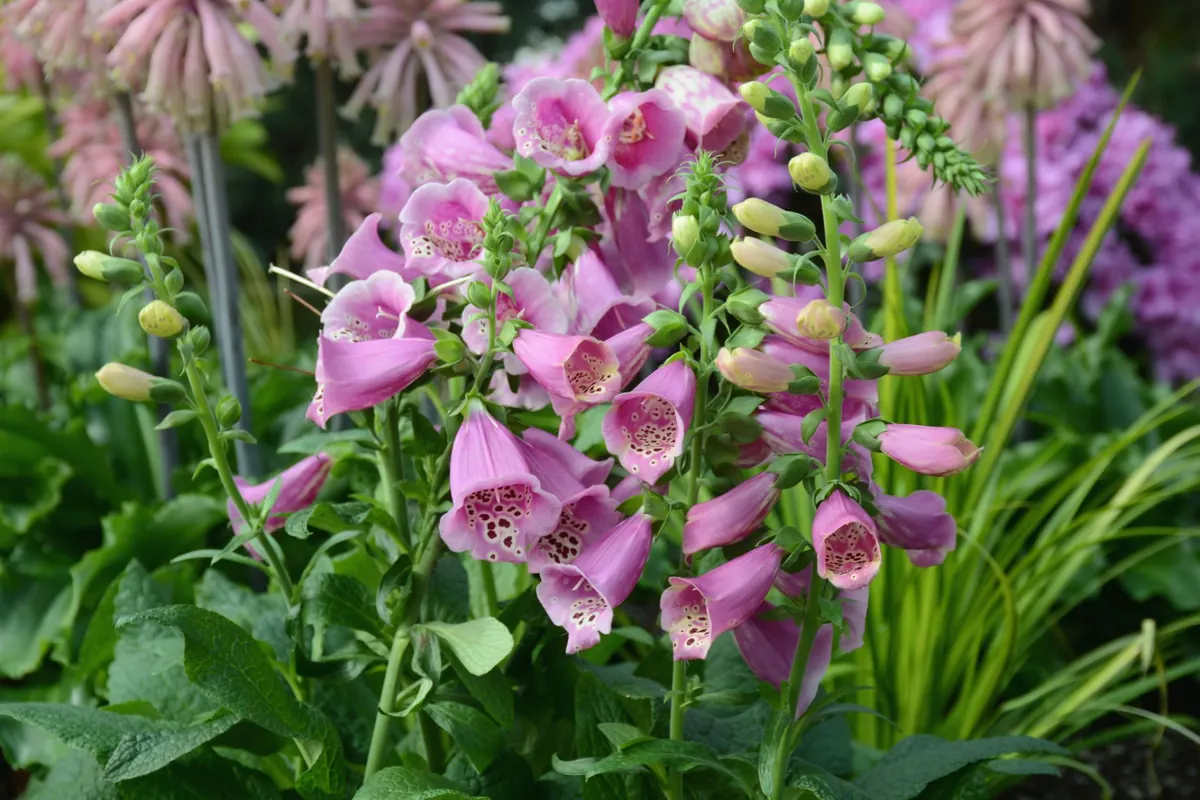
Foxgloves do most of the work themselves. A single spire of Digitalis purpurea can carry a border from late spring into midsummer, and even after the bells drop, the rosette below stays neat and green through the rest of the season. What foxgloves don't do is spread sideways. They leave gaps at ground level and a hole in the planting once flowering finishes. Good companions fill those gaps: covering soil, softening the ankles of tall stems, and taking over as the spires fade. The trick is to choose by layer, leaf and season rather than grabbing whatever else happens to be blooming that week.
Think in Layers, Not Just Neighbors
A foxglove is a vertical element, so the best partners answer one of three questions. What covers the ground beneath it? What fills the middle height beside it? What inherits the space after it finishes? Run every candidate through those questions and the planting almost designs itself.
- Ground layer: heuchera, hardy geranium, epimedium or pulmonaria — low, leafy plants that hide the bare lower stems and keep weeds down.
- Middle layer: astilbe, salvia or peony — mounding or spiky plants that sit at roughly half the foxglove's height and give the border a middle register.
- A second spire: allium, delphinium or a later salvia — another vertical line at a different height, so the border never looks like a row of identical exclamation marks.
- Season bridge: Japanese anemone, grasses or dahlias — plants that look good in August, when the foxgloves are down to seedheads.
Spacing matters as much as selection. Give each foxglove 12 to 18 inches of clear air around its crown; the rosette needs to breathe and it rots easily if a neighbour flops over it through a wet winter. Let companions knit together at ground level, but keep leaves off the crown itself.
Six Companions for Shade and Woodland Edges
Hosta. The classic pairing, and still the best. Broad, ribbed hosta leaves make the narrow foxglove spire look taller and more elegant than it is. Choose a large cultivar for the back of a shady bed and let pale foxgloves rise out of it. Hostas also hold the space after the foxgloves are cut back.
Ferns. Lady fern, male fern or the quieter Japanese painted fern bring fine, lacy texture that contrasts with solid bells. Ferns handle the same moist, humus-rich soil foxgloves like, and their fronds screen the dying foliage in July.
Astilbe. Feathery plumes give you a second, lower spire in the same magenta-to-cream range. Put a deep pink astilbe under apricot foxgloves and the color conversation carries across the bed.
Hellebore. Evergreen, architectural and flowering in late winter, hellebores keep a woodland bed from looking empty in the months when foxgloves are only a flat rosette. Plant them in front, slightly to one side.
Heuchera. Foliage color is the point here: bronze, burgundy or lime leaves repeat and amplify the foxglove flowers without competing for attention. They also tolerate dry shade under trees, where foxgloves will still manage if the soil is not bone dry.
Japanese anemone. Slow to start and worth the wait. It sends up its own slender stems just as the foxgloves finish, filling the same footprint with white or pink flowers from late summer into autumn.
Six Companions for Sun and Open Borders
In full sun, foxgloves of the perennial kind do best — Digitalis grandiflora, the rusty Digitalis ferruginea and Digitalis x mertonensis all take more heat than the common purple foxglove. Pair them with plants that share the same free-draining ground.
Allium. Spheres against spires. Plant alliums a few weeks ahead of the foxgloves and the two vertical shapes overlap, purple globes floating above the bells. The allium foliage will be yellowing by then, so hide it behind geraniums.
Salvia. A long-blooming salvia such as 'Caradonna' gives you narrow spires in deep violet over many weeks, at about half the height of a foxglove. It repeats the vertical rhythm instead of fighting it.
Peony. Big, blowsy flowers in early summer have the volume foxgloves lack. Set peonies behind or beside the spires so their heavy heads read as a mass, and let foxgloves thread through the gap between them.
Roses. Shrub and climbing roses give structure while foxgloves supply the cottage-garden looseness. Pale roses with white or apricot foxgloves at their feet is one of the most reliable combinations in a sunny border.
Hardy geranium. Geranium 'Rozanne' or a soft blue Geranium pratense sprawls through the base of the planting, covering soil, linking clumps and flowering until frost. It is the single most useful plant for disguising a foxglove's bare ankles.
Grasses. Stipa tenuissima or tufted hair grass catch light and move in the slightest breeze, which keeps a border alive once the bells are gone. Leave foxglove seedheads standing among them for winter silhouette.
Color Echoes and Foliage Contrast
Magenta, Purple and Chartreuse
Purple foxgloves next to lime-green foliage — a golden hosta, chartreuse heuchera, or the yellow-green flowers of lady's mantle — look sharper than either does alone. Add a violet salvia and the bed reads as one deliberate scheme.
White, Silver and Blue
White foxgloves with silver foliage and blue flowers make a calm, cool border that works in shade or sun. Think lamb's ears, artemisia, blue hardy geraniums and pale hostas. It is the easiest palette to get right if you are new to planting in layers.
Rust, Bronze and Deep Red
Rusty foxglove and bronze sedge or heuchera make a warm, late-summer combination that suits gravel gardens. Keep the surrounding colors muted so the rust tones aren't muddied.
Planting, Spacing and Timing Notes
Most foxgloves are short-lived: they flower, set seed and fade. Treat them as a moving population rather than fixed furniture. Leave two or three spikes to ripen and shed seed each year, and you will almost always have seedlings to move where you want them the following spring. If you prefer a tidier border, cut spent spikes back before the seed drops.
Plant in autumn if you can — roots settle while the soil is warm — or in early spring before growth takes off. Water through the first summer, mulch with compost rather than bark chips, and stake tall cultivars in exposed gardens before the flower spikes fill. Slugs are the main threat to young rosettes.
One safety note worth repeating: all parts of Digitalis are toxic if eaten. Wear gloves when handling or cutting stems, wash your hands afterwards, and plant them where children and pets are unlikely to graze. If you suspect someone has eaten any part of the plant, contact a medical professional or a poison control service straight away.
Start With Three
You do not need twelve plants to make this work. Pick one ground cover, one mid-height partner and one late-season filler, then place a foxglove between them. A shade bed of heuchera, astilbe and Japanese anemone with a single white foxglove rising through it will look more considered than a row of anything. In a sunny border, try hardy geranium, salvia and a clump of stipa, with two or three foxglove spires spaced well apart. Plant it, leave some seed to fall, and the border will rearrange itself better than you could plan it.
Photo: Jeffrey Eisen / Pexels