Designing a Woodland Border with Foxgloves and Ferns
A woodland border works best when it looks like something that happened, not something that was arranged. Foxgloves leaning out over a froth of fern fronds, hostas catching one stripe of afternoon light, pulmonaria spotting the ground beneath — the whole thing reads as natural because it copies real woodland structure: tall flower spikes rising out of soft mounds, over a low carpet that holds the soil.
You can build that structure in an ordinary garden. It takes a little observation before you plant, and patience through the first two seasons while the foxgloves work through their biennial cycle. Get the layers right and the border starts editing itself.
Read the Light Before You Choose a Plant
Woodland shade is rarely uniform. Stand in your intended border at noon in June and again at four in the afternoon. If you get two to four hours of sun, especially morning sun, you have the conditions foxgloves want. If the ground stays dark all day, lean on ferns, epimedium and hellebores instead and treat foxgloves as a bonus.
Under deciduous trees the light pattern shifts through the year: bright and open in April, shaded by midsummer. That suits foxgloves, which do most of their growing before the canopy closes. Deep, dry shade under conifers or mature maples is a different problem — there, root competition matters as much as light. Fork leaf mould into the top few inches rather than digging deep, and don't pile soil against trunks.
Build the Border in Three Layers
Natural woodland has a vertical structure, and copying it is what makes a planting look established rather than dotted. Aim for something like this:
- Vertical spires: foxgloves, plus a few tall perennials such as astilbe or actaea for the years when foxgloves are between flowerings.
- Soft mounds: ferns, planted in drifts, which knit the border together and hide the bare ankles of the foxgloves.
- Bold foliage: hostas, rodgersia or ligularia used as repeated accents, spaced so each clump reads as a single gesture.
- Ground carpet: epimedium, tiarella, brunnera, pulmonaria and low sedges that shade the soil and suppress weeds.
Keep the layers loose. If you can see individual plants standing apart from one another, the planting is too thin; if you can't see any soil at all in the first season, you have overplanted. Somewhere between the two is right, and it will look sparse at first.
Foxgloves: The Vertical Accent
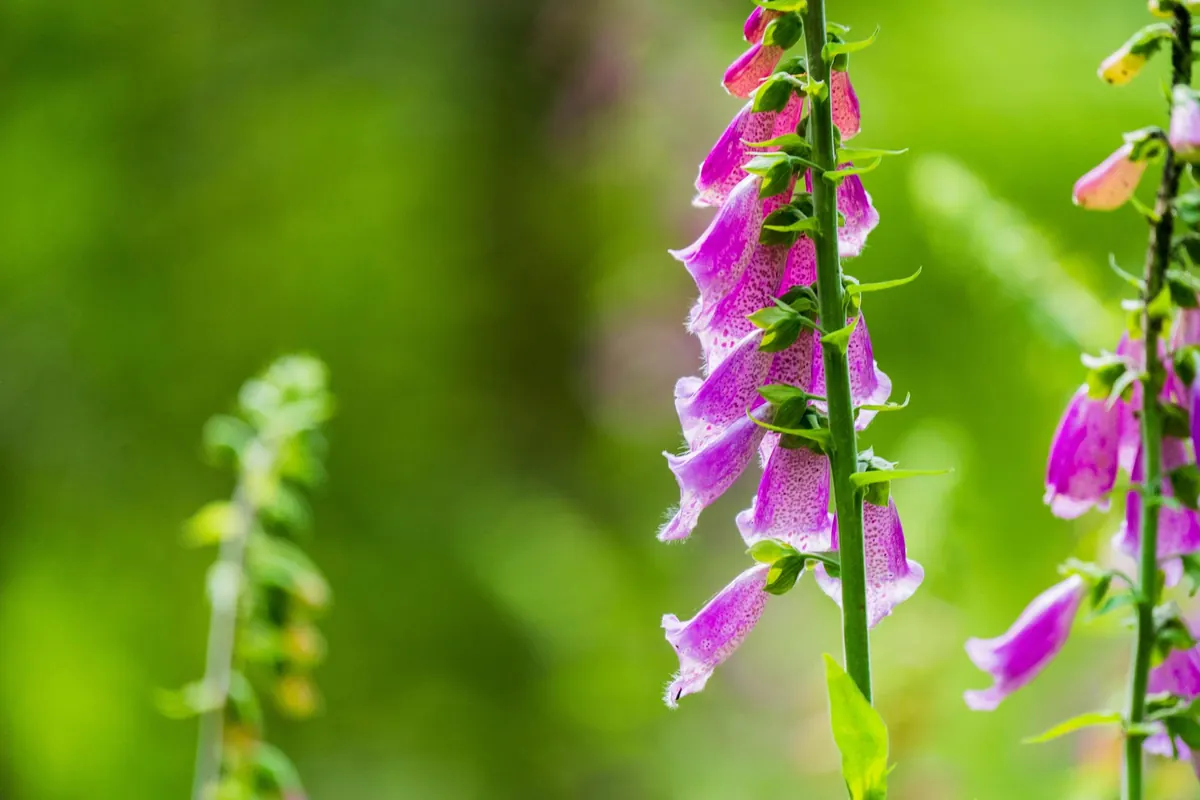
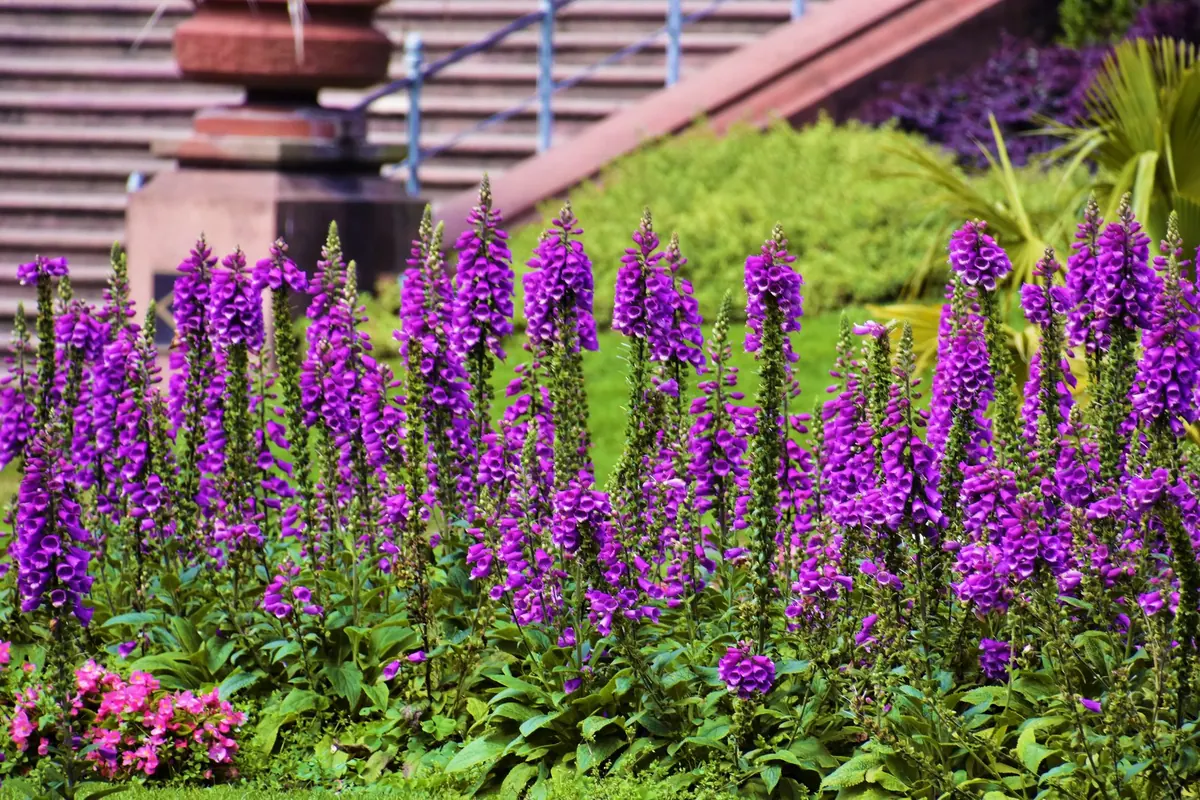
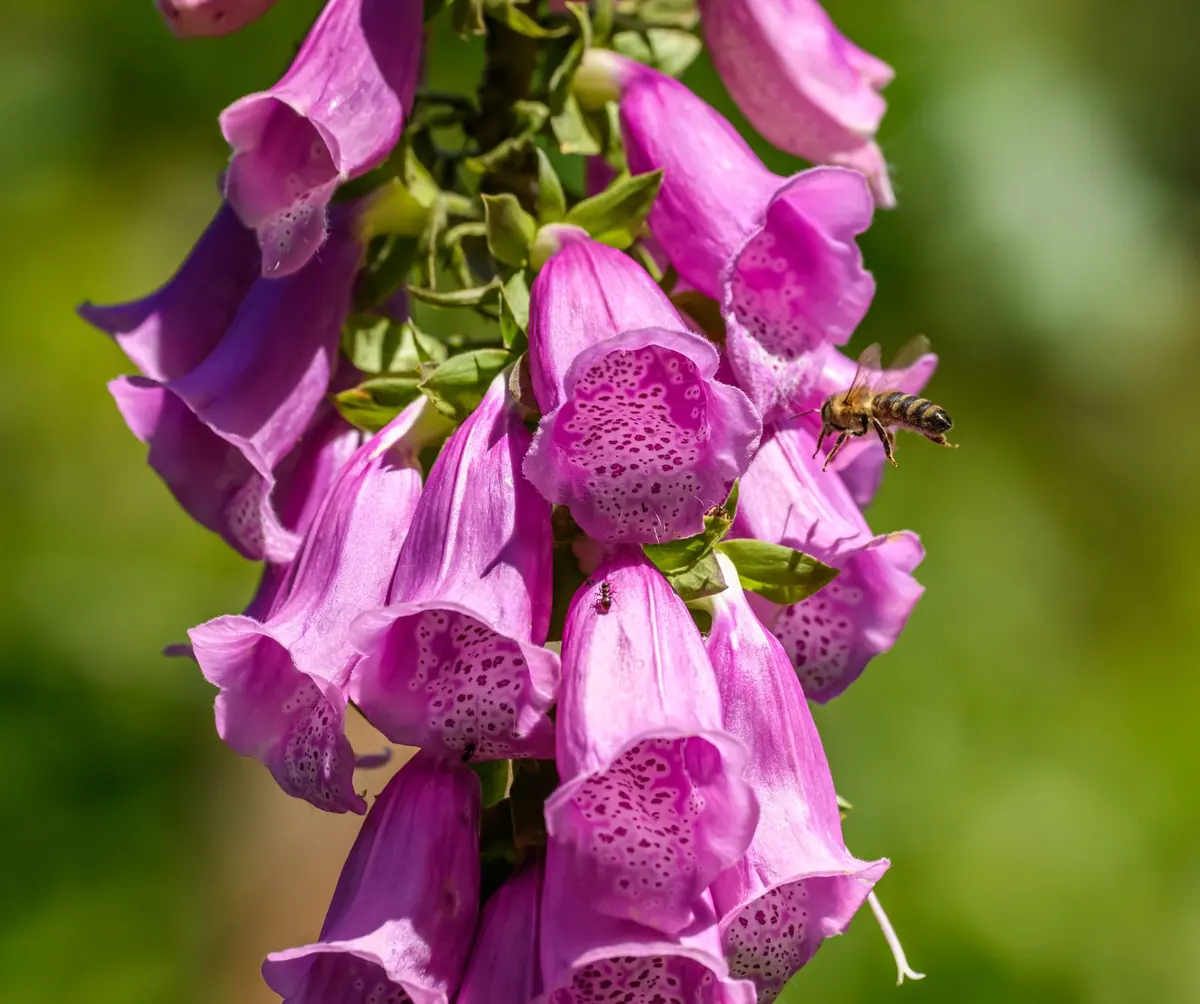
Digitalis purpurea is the classic woodland foxglove — a biennial that flowers in its second year, sets seed and dies, leaving seedlings to carry on. Plant it in groups of three to seven rather than singly, so the spikes read as a colony. Heights vary from about 60cm to well over a metre, and the purple, pink and white forms mix well; a few apricot Digitalis grandiflora or sulphur-yellow Digitalis lutea, both genuinely perennial, extend the season into midsummer and are less prone to powdery mildew in dry spells.
Foxgloves are toxic if eaten, and the sap can irritate skin. Wear gloves when handling them, wash your hands afterwards, and keep them away from young children and pets who chew plants. If you suspect any animal or person has ingested plant material, contact a doctor or veterinarian promptly.
Managing the biennial cycle
Leave the flower spikes standing until the lower two-thirds of the flowers have faded, then shake the seed where you want next year's plants and cut the stem back. Some plants will throw a smaller second flush from side shoots. Keep a small nursery patch — a corner of the vegetable bed or a few pots — where you can raise seedlings to move into gaps each autumn. In a mature border you want roughly a third flowering, a third in leafy rosettes, and a third as seedlings at any given time.
Ferns Do the Heavy Lifting
Ferns give you bulk, texture and movement without asking for much. Choose two or three kinds and repeat them rather than collecting a dozen species.
- Dryopteris filix-mas — the male fern. Tough, tolerant of dry shade, semi-evergreen.
- Dryopteris erythrosora — coppery new fronds in spring, evergreen, good winter presence.
- Athyrium niponicum var. pictum — Japanese painted fern, silver and maroon, slower and thirstier.
- Polystichum setiferum — soft shield fern, lacy and long-lived, evergreen in mild winters.
- Matteuccia struthiopteris — shuttlecock fern, spreads by runners and fills space quickly in damp soil.
Plant with the crown at soil level, never buried, and water through the first summer. Cut deciduous fronds down in late winter, before the new croziers unfurl, so you can enjoy the unfurling against clean ground.
Hostas and the Shade Perennials That Hold It Together
Hostas are the easiest way to add weight to a woodland border, but they need moisture and protection from slugs. Plant them where you can see them from a window, so evening slug patrols actually happen, and don't put them in the driest corner. Around them, use epimedium for spring flowers and evergreen leaf, brunnera for forget-me-not blue, pulmonaria for early bee food, tiarella for a spreading carpet, heuchera for dark foliage contrast, and hakonechloa for a bright grassy spill over the edge of the border. Repeat each in drifts of three or five — repetition is what separates a planting scheme from a plant collection.
Planting Out and the First Season
Autumn is the best planting window in most gardens, with early spring a close second. Improve the soil with two or three inches of leaf mould or garden compost, plant at the same depth each plant was growing in its pot, and water thoroughly. Then water deeply about once a week through the first summer rather than little and often. Mulch with leaf mould in autumn, keeping it clear of fern crowns and hosta stems.
Skip the general-purpose fertiliser. Rich soil pushes soft growth that flops and mildews; woodland plants evolved on a slow diet of falling leaves. In exposed spots, plant foxgloves among ferns — the fronds support the stems and you avoid staking.
Keeping It Looking Wild on Purpose
Let the border be slightly untidy in winter. Leave seed heads for birds, cut back spent foliage in early spring as new growth appears, and top-dress with leaf mould each autumn. Then edit: pull foxglove seedlings that have landed in the middle of a hosta, leave the ones filling a gap between ferns, and lift self-sown plants while they are still small if you want them somewhere else.
Divide crowded ferns every few years in early spring, and pull tree seedlings before they get a grip. By the third season you will be doing less planting and more choosing — deciding which seedlings to keep and which to give away. That is the point at which a woodland border stops being a project and starts being a place.
Photo: Petr Ganaj / Pexels