10 Foxglove Varieties for Cutting Gardens (and How to Use Them)
Cut foxgloves have a reputation, and mostly it is deserved. Pick a stem of common foxglove at the wrong moment and you will have a limp spire by teatime, a ring of fallen bells on the tablecloth, and a renewed belief that foxgloves belong outdoors. Choose the right variety and cut it at the right stage, though, and you get a three-foot wand of speckled bells that holds for a week and does something no bucket of supermarket flowers can imitate.
The difference is partly technique and mostly genetics. Some Digitalis hold their flowers all the way round the stem, some face upward rather than sideways, and some simply have thicker stems and better posture. Below are the ones worth bed space in a cutting garden, plus how to handle them once they are in your hand.
What Makes a Foxglove Worth Cutting
Three qualities matter. First, height: a stem under about two feet is awkward in a mixed bouquet, though it can be charming in a small jug on its own. Second, spike proportion — you want a long run of flowers above a clean length of bare stem, so the stem can stand in water and still show off. Third, habit: foxgloves that carry flowers all around the spike look good from every angle, while one-sided types have to be turned to face the room.
Sturdiness counts too. A stem that bends under the weight of its own bells is a stem that needs wire, and wiring foxgloves is nobody's idea of a good afternoon.
The Biennial Spires: Digitalis purpurea Worth Growing
Common foxglove is a biennial or short-lived perennial, sown one summer to bloom the next. Most of the good cut-flower selections come from this group, and they share the same requirements: sun to part shade, decent drainage, and a little shelter from wind.
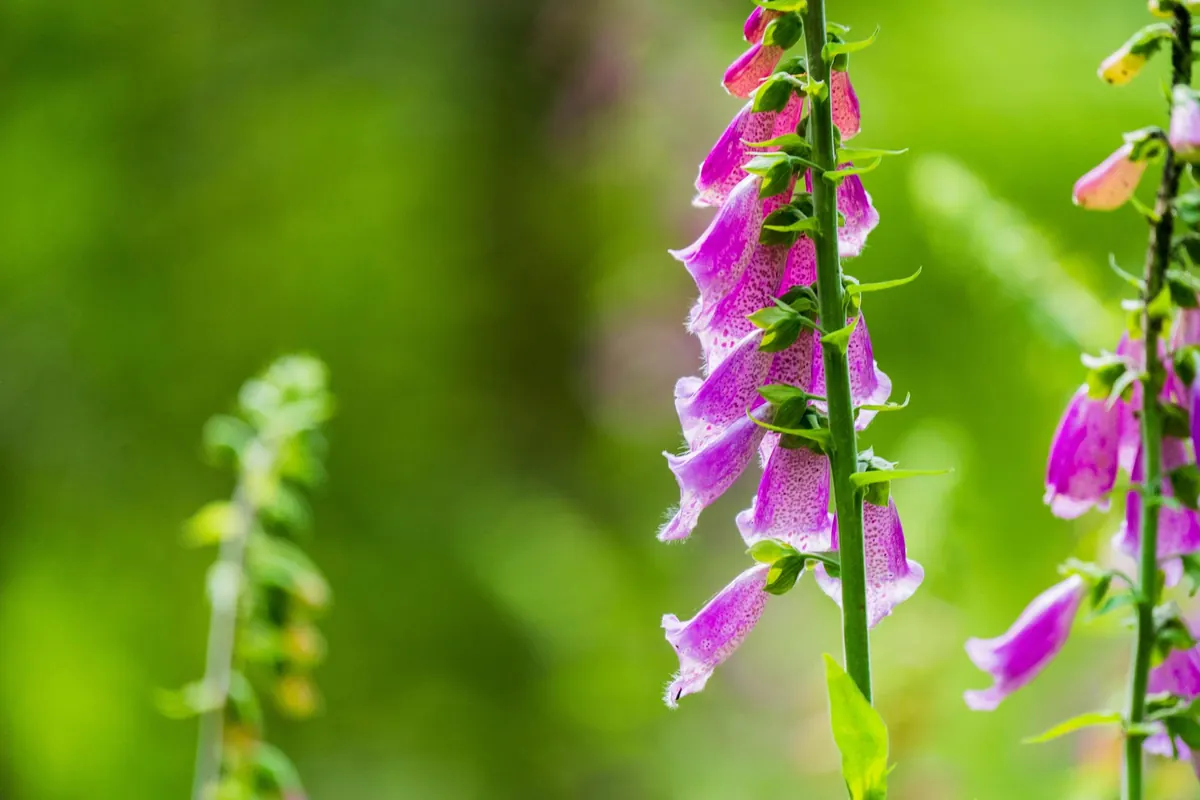
- Excelsior Group — the benchmark for cutting. Flowers are carried all round the stem in soft pinks, creams and mauves, on spikes that often reach four to five feet. Because nothing is hidden at the back, every stem works in a bouquet.
- 'Candy Mountain' — upward-facing bells in rose pink, held around the stem, roughly three to four feet. The upturned flowers show their speckled throats from above, which is exactly what you want in a vase on a low table. Often blooms in its first year if sown early under cover.
- 'Pam's Choice' — creamy white bells with a deep maroon throat, about three to four feet. Fewer stems per plant than Excelsior, but the ones you get are worth waiting for.
- 'Sutton's Apricot' — an old apricot-peach selection with a soft, slightly faded quality that mixes beautifully with pale roses and grasses.
- 'Alba' and the white forms — pure white, slightly shorter, endlessly useful for weddings and for any arrangement where colour is already loud.
- Giant Spotted and Shirley types — mixed strains with heavy speckling inside the bells. Variable, but the best stems are superb.
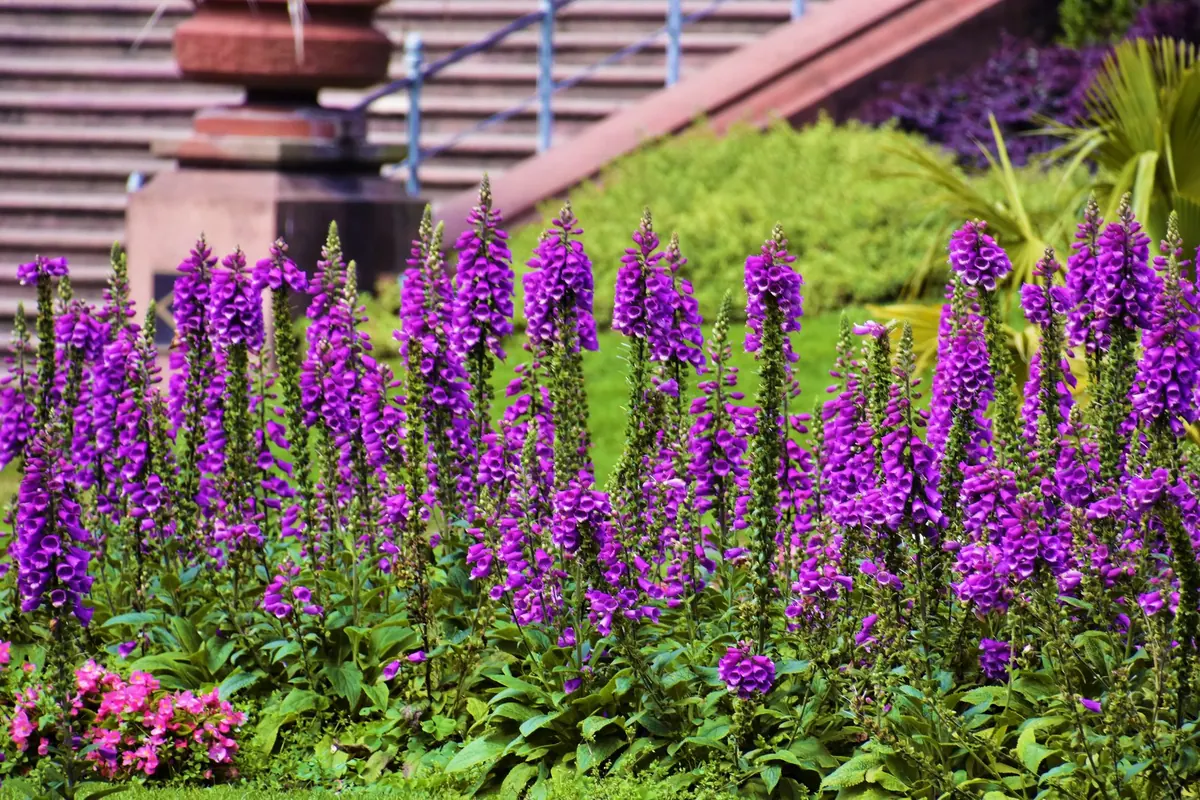
Grow them in a block rather than a row if you can. Close planting encourages taller, straighter stems as the plants reach for light, and it makes staking a whole lot simpler. Twelve to eighteen inches apart is plenty.
Perennial Foxgloves With Better Stems
If you would rather plant once than sow every year, these are the ones to know. They tend to be slower to establish but far better behaved.
- Digitalis ferruginea, the rusty foxglove — four to five feet of narrow, golden-brown, orchid-like flowers in high summer. Perennial, drought-tolerant once established, and arguably the best of all foxgloves in a vase. The slender spikes slip easily into arrangements without dominating them.
- Digitalis parviflora, chocolate foxglove — three feet of dense, narrow, brown-purple spikes. Understated in the border, quietly excellent with dahlias and dark foliage.
- Digitalis x mertonensis — strawberry-pink, about three feet, with the large bells of purpurea and the perennial habit of grandiflora. Short-lived, so let a few seed heads ripen.
- Digitalis grandiflora and D. lutea — soft yellow, two to three feet, reliable and long-lived. Shorter stems, so treat them as accents rather than the backbone of a bouquet.
- Digitalis obscura — amber and rust flowers on a shrubby plant. Loves sharp drainage and a hot spot; not one for cold, wet clay.
Hybrids and Specialty Selections
The Digiplexis hybrids — sold as Digitalis Illumination, sometimes listed as Digitalis x valinii — are sterile crosses with Isoplexis, which means they flower for months instead of weeks. 'Illumination Flame' and 'Berry Canary' are the familiar ones, in coral-pink and soft yellow. Stems are shorter than a good Excelsior and the plants are only borderline hardy, so treat them as a long-blooming bonus rather than a cutting staple.
Worth trying if you like unusual material: Digitalis lanata, the woolly foxglove, with small creamy bells on tidy stems, and any of the pale, felted Heywoodii forms, whose grey foliage is as useful as the flowers.
When to Cut — Timing Beats Technique
This is where most foxglove disappointment starts. Cut too early and the buds never open; cut too late and the lower bells drop the moment you set the vase down.
- Aim for the moment when roughly the bottom third to half of the flowers on a spike have opened, with plenty of tight buds still to come at the top.
- Cut in the cool of the morning, once the dew has dried, or in the evening. Mid-afternoon stems wilt fastest.
- Take the longest stem you can — eighteen inches or more — cutting just above a leaf node.
- Strip the lower leaves immediately. Foliage below the waterline rots and clouds the water faster than anything else.
- Get stems into water within a few minutes. A bucket carried down the row saves more flowers than any additive.
If you want dried material, leave a few spikes to set seed. The brown, papery seed heads are architectural in autumn arrangements and last for months.
Conditioning and Vase Life
Foxglove stems are hollow, which is why they flop. Once cut, recut the base at an angle and stand the stems in deep, cool water for at least four hours — overnight in a cool, dark room is better. If stems still curl, sear the bottom inch in just-boiled water for a few seconds, then transfer straight to cold water. This is the same trick used for lupins and hollyhocks, and it works.
Expect five to seven days in a cool room, less in a warm one. Because foxgloves open from the bottom up, the lower bells will fade first: pick them off as they go and the spike keeps looking presentable. Change the water every couple of days and keep the vase away from direct sun and fruit bowls.
In arrangements, use foxglove spikes as the vertical line — one or three, never an even number. They sit well with roses, sweet peas, alchemilla, mint, grasses and the first dahlias of the season. Snip individual bells and float them in shallow dishes, or use the shortest spikes in bud vases where the speckled throats can be seen up close.
Practical Notes Before You Plant
Sow biennial types in late spring or early summer for flowers the following year, and keep a small nursery row going every season so you never have a gap. Perennials can go in during spring or early autumn. Stake tall spikes early with discreet canes or grow them through horizontal netting, and water in dry spells — foxgloves sulk in drought and topple in rich, loose soil.
One caution worth repeating: every part of a foxglove is toxic if eaten, fresh or dried. Wear gloves if you are handling a lot of foliage, wash your hands afterwards, and keep clippings and vases out of reach of children, cats and dogs. If you suspect someone has swallowed plant material, contact a poison control service or a medical professional straight away rather than waiting for symptoms.
Get the variety and the timing right, and foxgloves stop being a gamble. They become the stems that give a summer bouquet its height, its movement, and that faintly wild quality that no amount of careful colour planning can fake.
Photo: Rosa Stone / Pexels